Asset managers overseeing utility-scale solar portfolios face a recurring challenge. When something affects plant performance, finding the answer means navigating multiple systems, pulling reports from SCADA platforms, cross-referencing historical trends, and often waiting for technical teams to interpret the data. A question as simple as “what caused yesterday’s production dip?” can consume hours of coordination and analysis time.
Chat-to-data technology is changing that reality. By applying conversational AI to solar operations data, asset managers can now ask questions in plain language and receive immediate, contextual answers drawn directly from their monitoring systems, historical records, and project documentation. This approach transforms data access from a specialist task into an accessible resource for anyone managing solar assets.
What Chat-to-Data Means for Solar Operations
Traditional solar asset management relies on dashboard-based monitoring systems. These platforms display key performance indicators and generate periodic reports, but they require users to know where to look, which metrics matter, and how to interpret trends. When anomalies occur or stakeholders request specific insights, extracting that information typically involves manual data export, spreadsheet analysis, and report preparation.
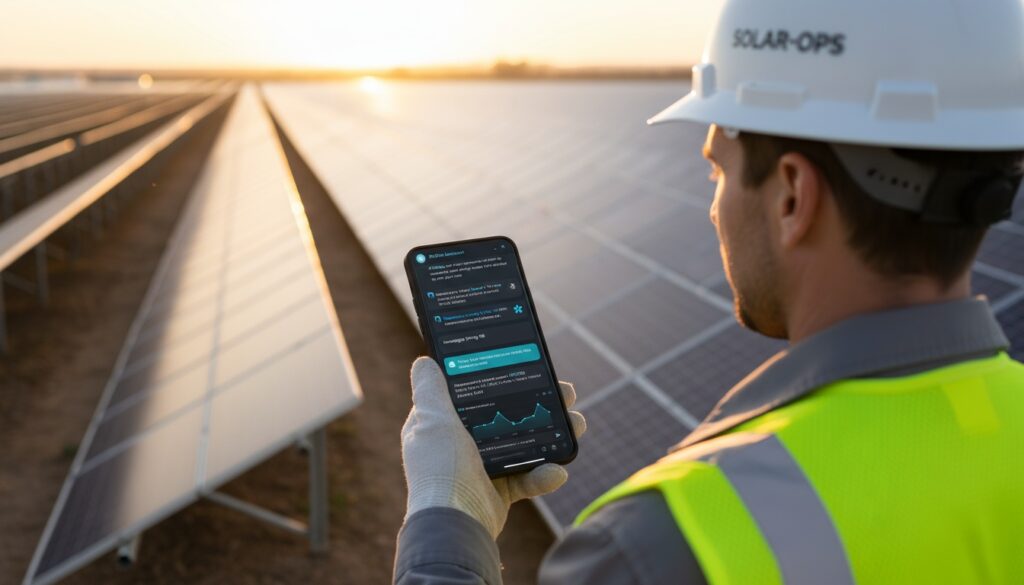
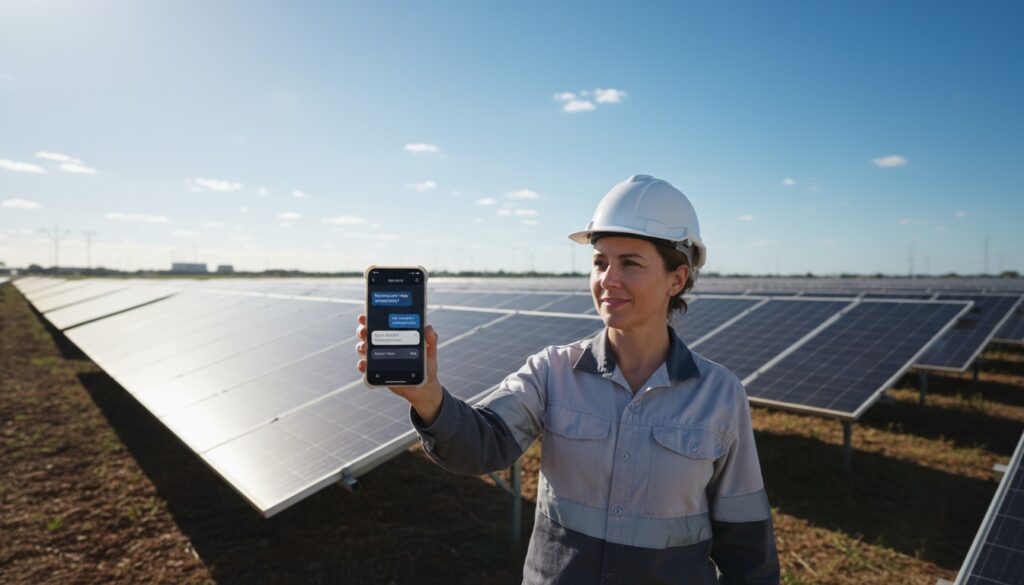
Chat-to-data platforms take a different approach. Rather than requiring users to navigate through interfaces and construct queries, these systems allow asset managers to simply ask questions. The underlying AI accesses SCADA data, performance models, maintenance records, and operational documentation to provide relevant answers in seconds. The interface removes the technical barrier between questions and insights.
For solar asset managers, this capability addresses several operational friction points. Portfolio reviews that previously required assembling data from multiple sites can now happen through targeted questions. Performance investigations that once meant coordinating with multiple technical staff can begin immediately. Stakeholder reporting that demanded hours of data preparation can be generated on demand.
Time Savings in Practice
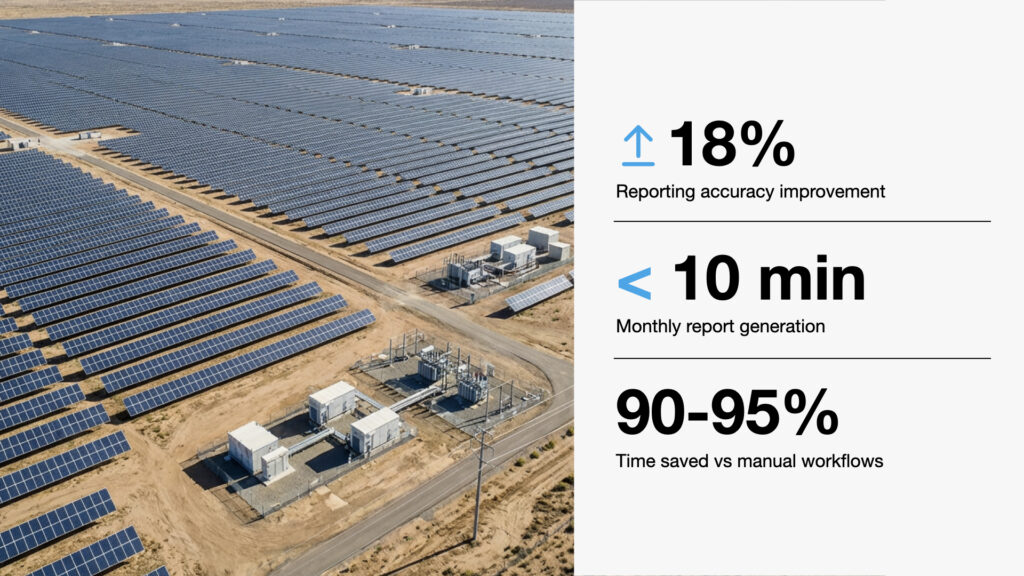
The efficiency gains from chat-to-data become evident when examining routine asset management activities. Consider the monthly performance review process. Traditional approaches require extracting data from each site’s monitoring system, normalizing the information for comparison, identifying deviations from expected performance, and documenting findings. This workflow typically consumes multiple hours per site and scales poorly as portfolios grow.
With conversational access to solar operations data, the same review process transforms. An asset manager can ask which sites underperformed expectations last month, what factors contributed to deviations, and how current performance compares to historical patterns. The system retrieves relevant data, performs the necessary analysis, and presents findings in minutes rather than hours.
Real-world deployment data demonstrates the scale of these improvements. Solar farms using chat-based analytics have reduced routine performance analysis from over forty hours per month to under five minutes. This time compression does not come from eliminating necessary analysis but from removing the manual steps of data gathering, formatting, and basic interpretation.
The time savings extend beyond scheduled reviews. When unplanned events occur, rapid access to contextual information becomes critical. An inverter fault, a sudden production drop, or an unexpected alarm condition all require swift investigation. Chat-to-data platforms allow immediate exploration of what happened, when it started, which equipment is affected, and what historical patterns might be relevant. These investigations can begin the moment a question arises rather than after someone has been tasked with pulling reports.
Making Data Accessible to Non-Technical Users
Perhaps the most significant impact of chat-to-data in solar operations is democratizing access to technical information. Solar asset portfolios involve stakeholders with varying technical backgrounds. Executives need performance summaries for board presentations. Investors require return analysis tied to operational metrics. O&M coordinators need fault history and maintenance records. Finance teams want to understand how weather variations affected revenue.
Traditional monitoring platforms require specialized knowledge to extract this information effectively. Users need to understand which dashboards contain relevant data, how metrics are calculated, and what normal operating ranges look like. This knowledge barrier means that most solar operations questions flow through a small group of technical experts who translate stakeholder needs into data queries and then interpret results back into business language.
Conversational interfaces eliminate this translation layer. When an executive asks about Q3 availability across the portfolio, or when a financial analyst needs to understand how many sunny days were lost to equipment issues, they can pose those questions directly. The system interprets the intent, accesses appropriate data sources, and formulates responses that match the questioner’s context and needs.
This accessibility has training implications as well. Traditional SCADA and monitoring platforms require substantial onboarding. Users must learn navigation structures, report generation procedures, and data interpretation methods. Chat-to-data systems have demonstrated training requirements of less than one hour, focusing on teaching users what questions they can ask rather than how to operate complex interfaces. This reduced learning curve accelerates new staff integration and makes solar operations data available to broader teams.
Understanding How Chat Analytics Works
The technology behind conversational solar analytics integrates several components working together. At the foundation sits the data layer, connecting to existing SCADA systems, monitoring platforms, maintenance management systems, and document repositories. This integration happens without replacing existing infrastructure, instead creating a unified access layer across multiple data sources.
The AI component interprets natural language questions, determines what information is needed to answer them, and formulates appropriate data queries. This process involves understanding solar operations context. When someone asks about “underperformance,” the system understands this means comparing actual generation to expected output adjusted for weather conditions. When asked about “recent faults,” it knows to check alarm logs, inverter status records, and maintenance tickets.
Response generation combines retrieved data with solar operations knowledge. Rather than simply displaying raw numbers, the system provides context-aware answers. If asked why a site produced less energy yesterday, the response might note both a weather impact and an inverter that was offline for scheduled maintenance, distinguishing between controllable and uncontrollable factors.
Critically, effective chat analytics systems maintain audit trails. Each response includes source references, allowing users to verify information and explore deeper if needed. This traceability ensures that convenience does not come at the expense of accuracy or accountability.
Data Sources and Integration Points
Comprehensive chat analytics for solar operations draws from multiple data sources to provide complete answers. SCADA systems provide real-time and historical generation data, equipment status, and alarm logs. Weather stations and meteorological databases supply the environmental context needed to distinguish underperformance from normal weather-driven variation.
Maintenance management systems contribute work order history, scheduled interventions, and equipment lifecycle information. Asset documentation, including commissioning reports, warranty details, and equipment specifications, provides reference information for troubleshooting and analysis. Performance models supply the expected generation baseline against which actual output is compared.
Integration with these diverse sources happens through standard protocols and APIs where available, with custom connectors developed for legacy systems. The key architectural principle is preserving existing systems rather than requiring replacement. Chat interfaces add a layer of accessibility without disrupting established operational workflows or forcing migration to new platforms.
Ensuring Response Accuracy and Reliability
The shift from human-generated reports to AI-provided answers naturally raises questions about accuracy and trustworthiness. Solar operations involve significant financial stakes, making data reliability non-negotiable. Effective chat analytics systems address this requirement through several mechanisms.
Response sourcing provides transparency about where information comes from. When the system states that inverter efficiency dropped last week, it cites specific data points from the monitoring system, allowing verification. Confidence indicators help users understand when answers are definitive versus when they involve estimation or interpretation.
Validation against known baselines catches potential errors. If an AI response about site performance contradicts established performance ratios or physical constraints, safeguards flag the inconsistency for review. Regular auditing compares chat-generated insights against traditional analysis methods to ensure alignment.
Crucially, chat systems augment rather than replace human expertise. They accelerate the process of gathering information and performing routine analysis, but complex operational decisions still involve human judgment informed by AI-provided insights. The technology makes experts more efficient rather than attempting to eliminate the need for expertise.
Getting Started with Chat-Based Solar Analytics
Organizations considering chat-to-data capabilities for solar asset management typically begin with pilot deployments on a subset of their portfolio. This approach allows evaluation of the technology’s fit with existing workflows and validation of time savings before broader rollout.
Initial implementation focuses on connecting to core data sources, particularly SCADA and monitoring platforms that contain operational data. Early use cases typically center on routine questions that currently consume regular staff time, such as performance summaries, availability calculations, and basic fault identification.
Training requirements remain minimal, but organizations benefit from developing internal guidelines about effective question formulation. While conversational systems accept natural language input, users get better results when they understand what questions the system is designed to handle and how to be specific about timeframes, equipment, or conditions of interest.
As teams develop familiarity with chat analytics, usage typically expands from operational staff to include executives, financial analysts, and other stakeholders who previously relied on prepared reports. This expansion represents one of the technology’s key value propositions: making solar operations data accessible to everyone who needs it, not just those trained on specialized monitoring systems.
Measuring the Impact
Organizations deploying chat-based analytics for solar operations see quantifiable impacts across several dimensions. Time savings prove most immediately measurable, with routine reporting and analysis tasks showing dramatic duration reductions. These efficiency gains compound as portfolios grow, since chat interfaces scale more easily than manual reporting processes.
Response time to operational issues typically improves as well. When anomalies or faults occur, the ability to immediately explore contributing factors through conversation accelerates diagnosis and remediation planning. This faster response translates to reduced downtime and improved availability.
Decision quality metrics show improvement as more stakeholders gain direct access to operational data. When executives can explore performance questions themselves rather than waiting for prepared reports, strategic discussions become more data-informed. When financial analysts can directly investigate operational factors affecting returns, investment decisions incorporate operational reality more effectively.
Perhaps most significantly, organizations report that chat analytics helps surface insights that might otherwise remain buried in data. When asking questions becomes effortless, teams ask more questions and discover patterns or issues that structured reporting might miss.
What is chat-to-data for solar operations?
Chat-to-data refers to conversational AI systems that allow users to ask questions about solar farm performance and operations in natural language. Rather than navigating dashboards or generating reports, users simply type or speak their questions and receive immediate answers drawn from connected monitoring systems, historical data, and operational records.
Can non-technical staff use chat analytics effectively?
Yes, this represents one of the technology’s core value propositions. Chat interfaces eliminate the need to understand complex monitoring systems, data structures, or analysis techniques. Users with minimal technical background can access operational insights by asking questions in everyday language, making solar operations data accessible to executives, financial analysts, and other business stakeholders.
What data sources can chat analytics access?
Comprehensive chat analytics platforms integrate with multiple data sources including SCADA systems, monitoring platforms, weather databases, maintenance management systems, equipment documentation, and performance models. This unified access allows the system to provide complete answers that incorporate information from all relevant sources rather than requiring users to check multiple systems separately.
How do I know the chat responses are accurate?
Reliable chat analytics systems include several accuracy safeguards. Responses cite specific data sources, allowing verification. Answers are validated against known operational constraints to catch potential errors. Audit trails track how conclusions were reached. Regular comparison against traditional analysis methods ensures alignment. The technology is designed to augment human expertise rather than replace it, with complex decisions still involving expert review of AI-provided insights.
Transforming solar asset management from a data-gathering challenge into a conversation represents a fundamental shift in how teams interact with operational information. As portfolios grow and stakeholder demands for transparency increase, the ability to simply ask questions and receive immediate, accurate answers becomes increasingly valuable. Organizations that adopt chat-based analytics position themselves to manage larger portfolios with leaner teams while improving the quality and speed of operational decision-making.
Ready to see how conversational analytics can transform your solar operations? Book a meeting with our team to explore how chat-to-data fits your portfolio management needs.