
Every utility-scale solar operator knows the challenge. Performance data lives in SCADA systems that were never designed for insight. Monthly reports arrive too late to prevent losses. Fault detection relies on specialists who are increasingly difficult to hire and retain. Meanwhile, underperformance quietly erodes returns, often going undetected until annual reconciliations reveal the accumulated cost.
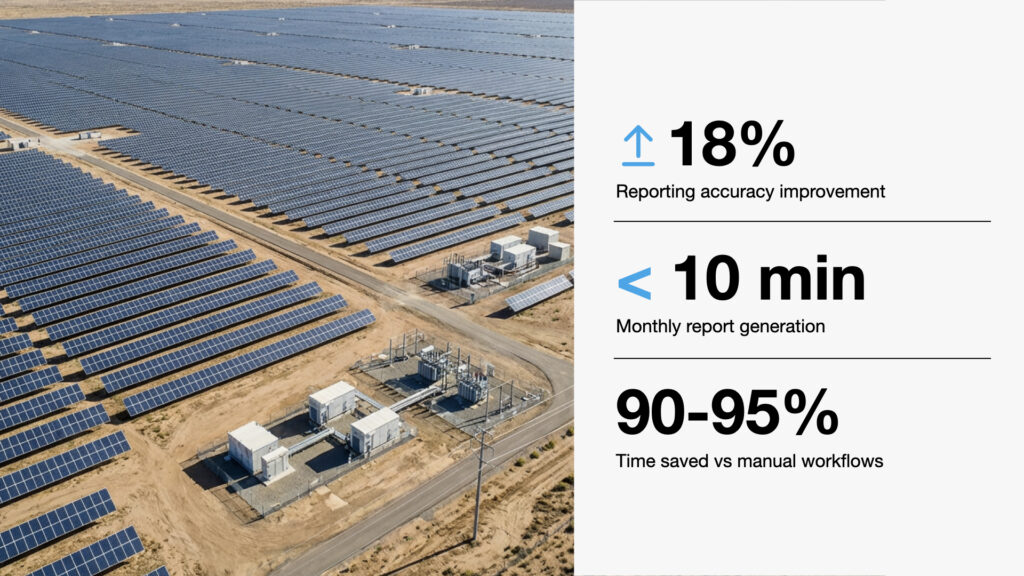
P2AgentX has deployed conversational AI on operational solar farms that now detect critical faults within minutes rather than weeks, generate automated analysis that previously consumed more than forty hours per month, and deliver insights to executives and engineers alike through a simple chat interface requiring less than one hour of training. These are not theoretical capabilities. They represent proven outcomes from live deployments with utility-scale operators.
The pilot programme offers qualifying operators a structured thirty-day pathway to validate these outcomes within their own operations. This article sets out the eligibility criteria, data requirements, security protocols, and timeline that define participation.
Who Qualifies for the Solar AI Pilot Programme
The pilot programme targets utility-scale photovoltaic operators who meet specific technical and operational criteria. Eligibility begins with asset size. The current pilot phase accepts facilities of at least twenty megawatts of installed capacity, ensuring sufficient data volume to demonstrate meaningful fault detection and performance analysis capabilities. Smaller installations may be considered where multiple sites can be aggregated under unified operational management.
Technical infrastructure represents the second qualifying criterion. Pilot sites must maintain operational SCADA systems with accessible data streams covering inverter performance, string-level monitoring where available, meteorological conditions, and grid export measurements. The platform integrates with established monitoring systems from major vendors including SMA, Huawei, Sungrow, and others, but requires no replacement of existing infrastructure.
Operational maturity completes the eligibility assessment. Ideal pilot participants maintain at least six months of historical operational data, employ dedicated operations and maintenance personnel who will interact with the platform daily, and possess decision-making authority to act on insights generated during the trial period. The platform delivers greatest value where operators can rapidly implement recommended interventions rather than routing findings through extended approval hierarchies.
Current pilot availability focuses on Australian operations where P2AgentX maintains established partnerships with major solar asset owners including Potentia Energy and BJEI Australia. International operators may express interest for future expansion phases as the platform scales beyond initial deployment markets.
Data Requirements and Connection Protocols
Platform deployment requires four categories of operational data, each serving distinct analytical functions within the AI architecture.
Real-time SCADA data forms the foundation. The platform ingests inverter-level production measurements, string current and voltage readings where available, combiner box data, and environmental sensors including irradiance, ambient temperature, and wind conditions. Data transmission occurs through secure API connections established during the initial integration phase, typically requiring coordination with existing SCADA vendors but no modification to operational control systems. Historical data spanning at least three months accelerates the calibration process by enabling the AI to establish baseline performance patterns before monitoring begins.
Plant documentation provides essential context. The platform incorporates single-line electrical diagrams, equipment specifications including inverter and module datasheets, nameplate capacity allocations, and as-built drawings where available. This documentation enables the system to distinguish between design limitations and operational faults, preventing false alerts that erode user confidence in automated detection systems.
Maintenance records complete the historical picture. Work order histories, equipment replacement logs, and known fault events train the platform to recognize patterns associated with specific failure modes. Sites with comprehensive maintenance records typically achieve higher fault detection accuracy within shorter calibration periods compared to facilities with sparse historical documentation.
Weather and grid context rounds out the data requirements. The platform integrates meteorological forecast data and actual conditions to distinguish between weather-related production variations and equipment-related underperformance. Grid export limits and curtailment schedules prevent the system from flagging intentional production limitations as faults requiring investigation.
Connection protocols prioritize security and minimal disruption. The platform operates through read-only data access, preventing any possibility of commands being issued to operational equipment. Data transmission occurs through encrypted channels meeting Australian government information security standards. For organizations with stringent cybersecurity requirements, deployment can proceed through air-gapped data transfer protocols, though this approach extends the setup timeline beyond the standard thirty-day period.
The Thirty-Day Proof Timeline
The pilot programme follows a structured timeline designed to demonstrate measurable value within one month of data connection.
Days one through five establish the technical foundation. Platform engineers configure secure data connections to existing SCADA systems, ingest historical operational data, and validate that all required data streams transmit correctly. This phase includes coordination with SCADA vendors where necessary and typically proceeds with minimal involvement from operational staff beyond providing access credentials and system documentation.
Days six through fifteen comprise the calibration period. The AI architecture analyzes historical performance patterns, establishes baseline expectations for normal operation under varying weather conditions, and learns site-specific characteristics including shading patterns, tracker behavior, and typical inverter performance profiles. During this period, the platform begins generating preliminary insights but remains in observation mode rather than issuing alerts that could distract operations teams with false positives during the learning phase.
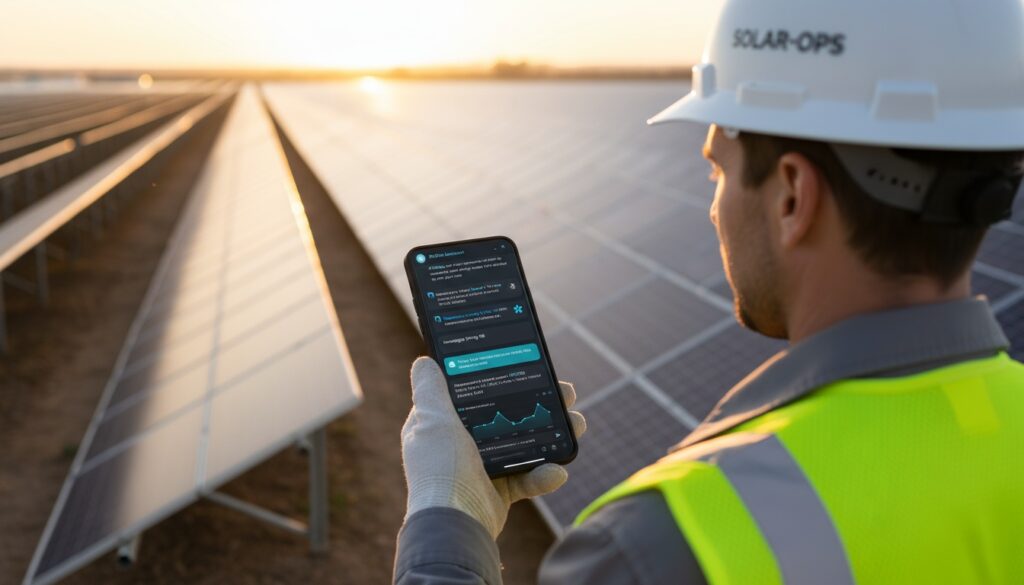
Days sixteen through twenty mark the transition to active monitoring. The platform begins delivering real-time fault detection, automated performance analysis, and conversational access to plant data. Operators receive training on interacting with the chat interface, interpreting generated insights, and requesting custom analyses through natural language queries. This training typically requires less than one hour per user, reflecting the platform’s design principle that operations personnel should focus on managing assets rather than learning software.
Days twenty-one through thirty deliver proof through measurable outcomes. The platform actively monitors operations, detects faults as they emerge, and generates the automated reports that replace manual analysis workflows. Previous pilots have identified critical equipment faults including irradiance sensor errors and inverter underperformance within this period. The final pilot assessment quantifies time savings, fault detection performance, and usability feedback from diverse user groups including field technicians, engineering staff, and executive leadership.
The thirty-day timeline assumes standard deployment conditions including cooperative SCADA vendors, available historical data, and responsive pilot site personnel. Sites with complex integrations or limited historical records may require extended calibration periods to achieve equivalent performance levels.
Data Security and Operational Protection
Solar farm operators rightfully maintain rigorous standards for operational data security and control system protection. The pilot programme addresses these concerns through multiple layers of safeguards.
The platform architecture enforces read-only access to all operational data sources. No commands flow from the AI system to SCADA infrastructure, inverters, or any field equipment. This design eliminates the risk of inadvertent or malicious control actions originating from the platform while still enabling comprehensive monitoring and analysis capabilities.
Data transmission employs enterprise-grade encryption consistent with Australian government information security standards. All data in transit between solar farm systems and cloud infrastructure uses TLS encryption. Data at rest receives AES encryption. For organizations subject to specific compliance frameworks or internal security policies, the platform supports deployment within private cloud environments or on-premises infrastructure, though these configurations extend implementation timelines beyond the standard pilot period.
Access controls follow role-based authentication protocols. Each user receives permissions appropriate to their operational role, ensuring that field technicians, engineers, and executives access only the data and functions relevant to their responsibilities. All platform interactions generate audit logs supporting compliance requirements and security investigations.
Network architecture minimizes attack surface. The platform connects to SCADA systems through dedicated network segments wherever possible, avoiding exposure of operational networks to internet-facing infrastructure. For sites where direct connectivity raises security concerns, air-gapped deployment models allow data transfer through secure file exchange protocols, though this approach sacrifices real-time monitoring capabilities.
Regular security assessments validate these protections. The platform undergoes penetration testing and vulnerability assessments conducted by independent security firms. Pilot participants receive documentation of these assessments along with details of the platform’s security architecture to support internal risk evaluation processes.
Frequently Asked Questions About Pilot Participation
Who qualifies for the solar AI pilot programme?
Qualification requires utility-scale photovoltaic facilities of at least twenty megawatts, operational SCADA systems with accessible data streams, at least six months of historical data, and dedicated personnel who can act on insights. Current availability focuses on Australian operations with international expansion planned for future phases.
What data does platform connection require?
The platform needs real-time SCADA data covering inverter performance and environmental conditions, plant documentation including electrical diagrams and equipment specifications, maintenance records, and weather context. All connections use read-only access through secure encrypted channels.
How long does the pilot deployment take?
Standard deployment follows a thirty-day timeline including five days for technical setup, ten days for AI calibration, five days for active monitoring transition, and ten days proving measurable outcomes through live operations. Complex integrations may require extended timelines.
How is plant data secured during the pilot?
Security protocols include read-only access preventing any control actions, encrypted data transmission and storage meeting government information security standards, role-based access controls, and network architecture minimizing exposure. Independent security assessments validate these protections.
What outcomes should operators expect from the pilot?
Previous deployments have reduced routine analysis from more than forty hours per month to under five minutes, detected critical faults including sensor errors and inverter underperformance, and enabled platform use by operations, engineering, and executive teams with less than one hour of training per user.
What happens after the thirty-day pilot concludes?
Successful pilots transition to commercial deployment under subscription arrangements. Operators receive documentation of demonstrated time savings, fault detection performance, and usability metrics to support internal procurement decisions. Sites where outcomes fail to meet expectations incur no ongoing obligations.
Begin Your Validation Journey
The solar industry loses more than ten billion dollars annually to avoidable underperformance and unresolved equipment faults. P2AgentX has proven that conversational AI can detect these losses as they emerge, deliver insights to teams who traditionally lacked access to specialized analytical tools, and generate the automated analyses that free specialists to focus on complex engineering challenges rather than routine reporting.
The pilot programme offers qualifying operators a structured pathway to validate these capabilities within their own operations. Thirty days from initial data connection to demonstrated outcomes. No replacement of existing infrastructure. No extended training programmes. No risk beyond the time invested in proper evaluation.
Book a meeting with the P2AgentX team to discuss your site’s eligibility, review data requirements specific to your SCADA infrastructure, and establish a pilot timeline that aligns with your operational priorities. The conversation typically requires thirty minutes and results in a clear assessment of whether pilot participation makes sense for your organization at this stage.
The platform that replaces complexity with clarity awaits connection to your operations. The only question is whether you will validate its capabilities now or wait until competitors gain the operational advantages that AI-driven asset management delivers.